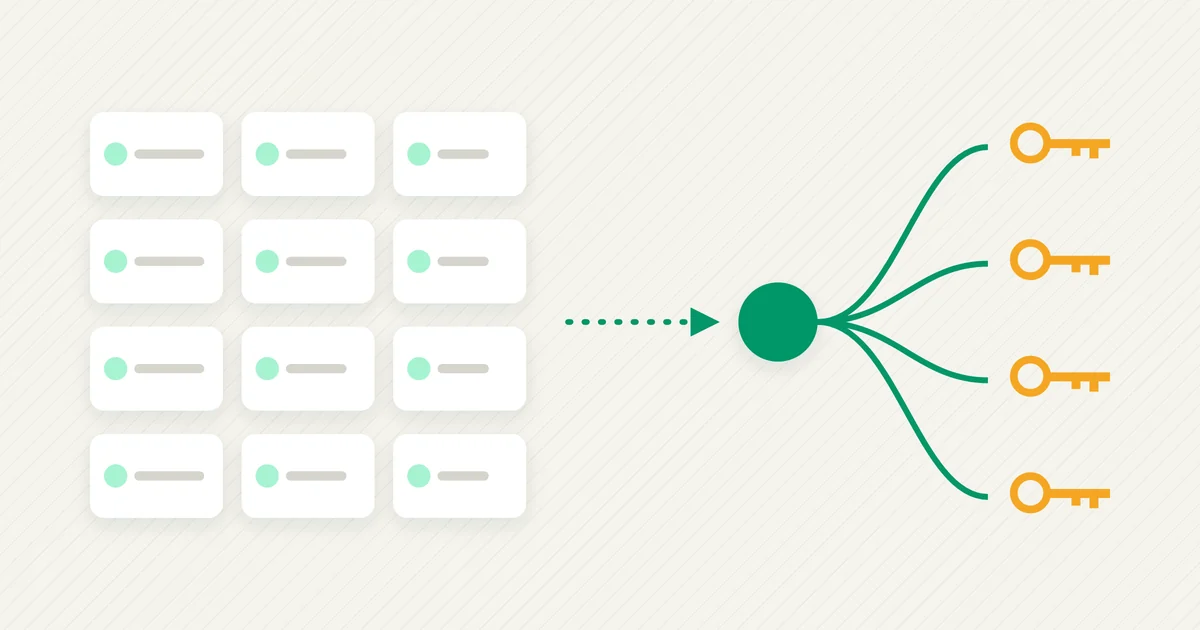
A seed phrase is the master backup of a self-custody crypto wallet. It is a list of ordinary words, usually 12 or 24, that the wallet shows you once when you create it. With those words, the wallet can be rebuilt on any compatible device, including every address and every private key it ever used.
It goes by several names: seed phrase, seed words, recovery phrase, mnemonic, or MetaMask's "Secret Recovery Phrase" (the MetaMask seed phrase). They mean the same thing, and a bitcoin seed phrase works the same way as an Ethereum or Solana one.
| Seed phrase | Private key | Wallet password or PIN | |
|---|---|---|---|
| What it unlocks | The whole wallet, every account and address | One address or account | The app or device in front of you |
| Can rebuild the wallet elsewhere | Yes | Only that one account | No |
| If someone else gets it | They can take everything | They can take that account | Usually only useful with the device |
| Can it be reset | No | No | Yes, by restoring from the seed phrase |
How does a seed phrase work?
Most wallets follow a standard called BIP-39. In plain terms:
- The wallet generates a large random number (128 bits for 12 words, 256 bits for 24 words).
- It adds a short checksum and splits the result into 11-bit chunks.
- Each chunk picks one word from a fixed list of 2,048 words.
- When you restore, the words are turned back into that number and run through a key-stretching function to produce a "seed".
- The seed creates a master key, and the wallet derives all your private keys and addresses from it in a fixed order (BIP-32 and its derivation paths).
Two things follow from this. First, the order of the words matters. Second, the last word is partly a checksum, which is why you can't just pick twelve favorite words: most combinations are invalid.
12 word vs 24 word seed phrase
Both are considered secure against guessing. Twelve words carry 128 bits of randomness, far more than anyone can brute-force. Twenty-four words carry 256 bits. Many hardware wallets default to 24; many phone wallets use 12. What matters more is how you store the words, not how many there are.
The BIP-39 seed phrase word list
The English BIP-39 list has 2,048 words, from "abandon" to "zoo". Every word can be identified by its first four letters, which is why some metal backup plates only have room for four letters per word. The standard also has lists in other languages, including Chinese, Japanese and Spanish, but a phrase must be restored with the same language list it was created in. Most wallets only accept English.
Seed phrase example
This is a well-known test phrase from the BIP-39 specification, published for developers. Never use it for real funds, because anyone can restore it:
abandon abandon abandon abandon abandon abandon
abandon abandon abandon abandon abandon about
A real crypto seed phrase looks the same: 12 or 24 common English words in a fixed order, with no numbers or punctuation.
The optional passphrase (the "25th word")
BIP-39 lets you add your own passphrase on top of the words. The same 12 or 24 words with a different passphrase open a completely different wallet, and a wrong passphrase doesn't show an error: it opens an empty wallet. That protects against someone who finds the paper, but it is also one of the most common reasons heirs fail to recover funds. If you use one, your recovery instructions must say that it exists and where it is kept. See hardware wallet PIN, seed and passphrase for how the three differ.
Seed phrase vs private key
When people compare a private key vs seed phrase, the difference is scope. A private key is a single secret that signs transactions for one address or account. A seed phrase is the source that every private key in the wallet is calculated from. Exporting one private key from MetaMask gives access to that one account; the Secret Recovery Phrase gives access to all accounts created in that wallet.
That is also why exchange accounts don't have seed phrases. On Coinbase, Kraken or Robinhood's main app, the exchange holds the keys and you sign in with a password. The seed phrase only exists in self-custody wallets, such as Ledger, Trezor, MetaMask, Phantom, Exodus or Robinhood Wallet.
Not every wallet uses BIP-39
Most seed phrase wallets follow BIP-39, but not all. Electrum uses its own seed format, which other wallets can't always read. Monero uses 25 words. Some newer wallets (multi-party computation or smart-contract wallets) have no seed phrase at all and rely on other recovery methods. Your backup notes should name the wallet software, because the same words may not restore in a different app.
Never use a "seed phrase generator" website
Searches for "seed phrase generator" and "12 word seed phrase generator with balance" are common. Any phrase created on a website could be recorded by that website. Sites that claim to find seed phrases with balances are scams or malware. Let your wallet or hardware device generate the phrase offline, and never type a real phrase into a web page, a chat or a support form. No legitimate support team will ask for it.
How to store a seed phrase
The short version:
- write it on paper or stamp it on metal, offline, never as a photo or a note in the cloud;
- store it where fire, water and curious visitors can't reach it;
- consider a second copy in a separate location;
- record the wallet name, whether there's a passphrase, and which coins or networks are involved.
The full guide is how to store a seed phrase safely for you and your heirs.
What happens to a seed phrase when you die
Nothing, which is the problem. There is no company that can reset it, no death certificate process and no court order that recovers it. If your family doesn't know the wallet exists, or can't find the words, the funds stay where they are. If the words sit in plain sight with no instructions, the wrong person may find them first.
A workable plan separates the two: the words stay in protected storage, and a set of instructions tells one trusted person that the wallet exists, where the backup is and what else they will need. See what happens to your crypto when you die for the full picture.
Common questions
What does seed phrase mean?
The seed phrase meaning is literal: it is the seed the wallet grows all its keys from, written as words so a person can copy it down.
What is a seed phrase in crypto?
A list of usually 12 or 24 words that a self-custody wallet generates when you set it up. It encodes the random number all of the wallet's private keys come from, so it can restore the whole wallet on another device.
Is a seed phrase the same as a private key?
No. A private key controls one address or account. A seed phrase generates all of the wallet's private keys, so it controls everything in that wallet.
How to recover a seed phrase if you lose it
Not from any company. If you still have access to the wallet, you can usually view or re-export it there (for example after entering your password). If both the wallet and the words are gone, the funds can't be recovered.
Can someone guess my seed phrase?
Not realistically, if your wallet generated it. Even 12 words have 2^128 possible combinations. Seed phrases are lost through theft, phishing, photos and cloud backups, not guessing.
Do exchanges like Coinbase give you a seed phrase?
Not for the exchange account itself, because the exchange holds the keys. Coinbase's separate self-custody wallet app does use a recovery phrase.
Should I put my seed phrase in my will?
No. A will may be read by several people and can become public in probate. Put the instructions for finding the backup somewhere private, and keep the words themselves separate.