Only if the family has what the owner had. Trust Wallet is a self-custody wallet app. The crypto is controlled by a 12-word recovery phrase, and anyone with that phrase can restore the wallet in the app on a new phone. The other way in is the owner's phone with the app still accessible. Trust Wallet itself can't open, reset or transfer the wallet for an estate.
This guide is for families and executors. It is general information, not legal or tax advice.
What Trust Wallet can and can't do after a death
Trust Wallet's help center says its support "cannot access your wallet or funds." If the recovery phrase is lost, it says, there is "no way to recover your wallet." Its security page adds that Trust Wallet cannot recover, freeze or move funds.
So there is no deceased-user process. An exchange can release an account to an executor with a death certificate and court papers. Trust Wallet holds no account and no keys, so there is nothing to release. As of November 2026, Trust Wallet doesn't publish any inheritance guidance.
What the family needs
| Item | Why it matters | Where it might be |
|---|---|---|
| Recovery phrase (12 words) | Restores the wallet in the app on any phone | Paper or metal backup in a safe, bank box, with the will, or with a trusted person |
| Phone plus screen lock and any app passcode | Opens the wallet already on the phone | The owner's phone; codes in notes or a letter of instruction |
| Cloud account plus encryption password | Restores an Encrypted Cloud Backup | The owner's cloud account (Trust Wallet's FAQ doesn't name the provider); the encryption password stored separately |
| List of wallets and networks | The owner may have created more than one wallet, each with its own phrase | Notes, tax records, a letter of instruction |
If the phrase can't be found, see what to do when the seed phrase is missing. For what a phrase looks like, see what is a seed phrase.
Encrypted Cloud Backup: could an heir use it?
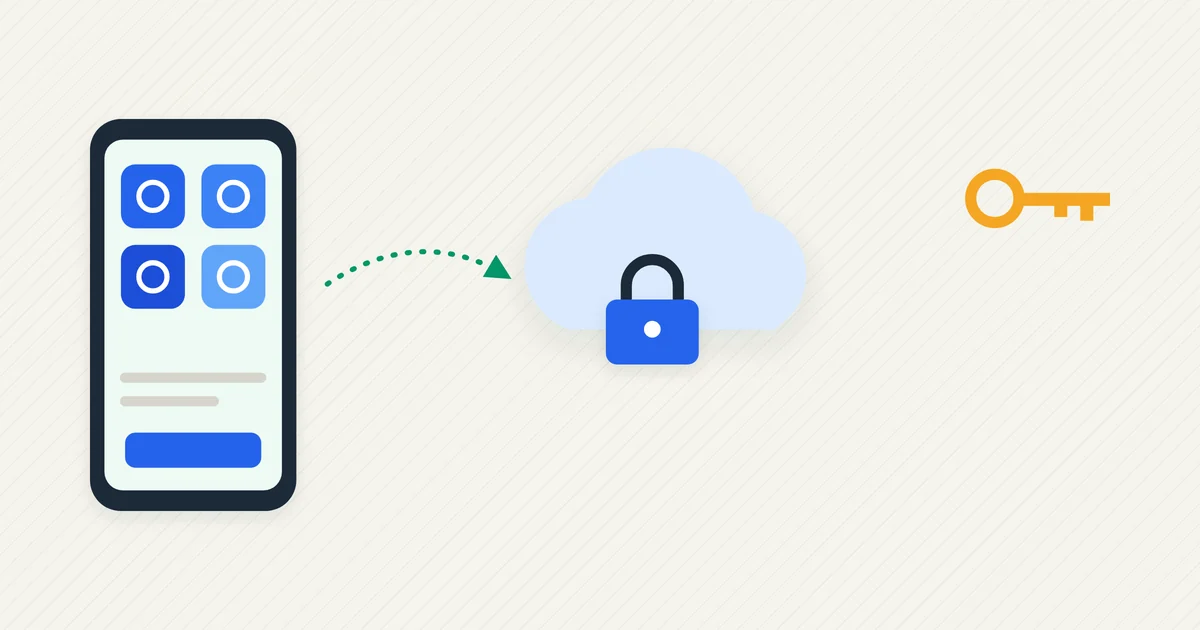
Trust Wallet offers Encrypted Cloud Backup. According to its FAQ, an encrypted copy of the wallet is saved in the user's own cloud account and protected by an encryption password the user chooses. Trust Wallet says it "does not store or maintain your encryption password, so we cannot recover or restore it."
For a family, that means two things are needed: access to the owner's cloud account and the exact encryption password. If either is missing, the backup can't be opened, and Trust Wallet can't help.
Signing in to a dead person's cloud account can raise legal issues, and Google and Apple have their own processes for deceased users. The executor should get legal advice before anyone uses the owner's accounts. Don't guess passwords or try to get around security.
Step by step for the family
- Secure the phone and papers. Keep the owner's phone charged and safe. Don't reset it, sign out, or delete the app.
- Never type the phrase into a website. A real restore happens only inside the official Trust Wallet app from the app store.
- Use a trusted technical helper. If a restore is needed, do it with someone you trust on a clean phone with nothing else installed.
- Confirm the executor's authority. Funds should move only under the executor's or administrator's legal authority.
- Move funds to an estate-controlled wallet. Create a new wallet with a new phrase that the executor controls, then transfer.
- Record values for taxes. Note each asset's value on the date of death and at transfer. See is inherited crypto taxable?
If you aren't sure which wallets or exchanges the owner used, start with how to find out if someone had crypto.
Beware of fake support
Trust Wallet says "Official Trust Wallet support will never ask for your recovery phrase." Since support can't access wallets anyway, no real agent needs it.
Scammers set up fake help pages on free hosting such as sites.google.com or pages.dev and answer public posts from people asking for help. Anyone asking for the phrase, the cloud backup password, remote access or a recovery fee is not Trust Wallet. See which wallet support numbers are real and our inheritance scam red flags.
If you use Trust Wallet: make this easier for your family
- Write down where the phrase backup is kept, not the words.
- Note whether you use Encrypted Cloud Backup, which cloud account, and where an authorized person can find the encryption password.
- List each wallet if you have more than one.
- Keep a letter of instruction and a digital asset inventory.
PingVaults can store instructions like these encrypted and deliver them to a chosen contact after a period of inactivity.
Common questions
Can Trust Wallet support recover a dead person's wallet?
No. Trust Wallet says support cannot access wallets or funds, and without the recovery phrase there is no way to recover the wallet.
Is the cloud backup enough on its own?
No. It also needs the encryption password. Trust Wallet doesn't store that password and can't reset it.
Can Trust Wallet freeze the funds while the estate is sorted out?
No. Trust Wallet says it cannot recover, freeze or move funds. Secure the phone and the phrase instead.
Does Trust Wallet have an inheritance feature?
Trust Wallet doesn't publish an inheritance feature or guidance as of November 2026. Planning has to happen outside the app.